
PARTICIPATORY COLLECTIVE
The participatory collective is a space where many charities and projects in Hull and East Riding come together in one virtual space. This is important to start a movement encouraging systemic change and it will work to stop division and uncertainty in communities. The participatory collective is vital in times like these where the world is facing serious problems like social injustice, climate change and poverty.
The collective will be a way to encourage stakeholders such as funders, academics and policy makers to get more involved and help make a real change. These stakeholders will be able to see past, current and future projects allowing them to engage and contribute to the charities’ research.
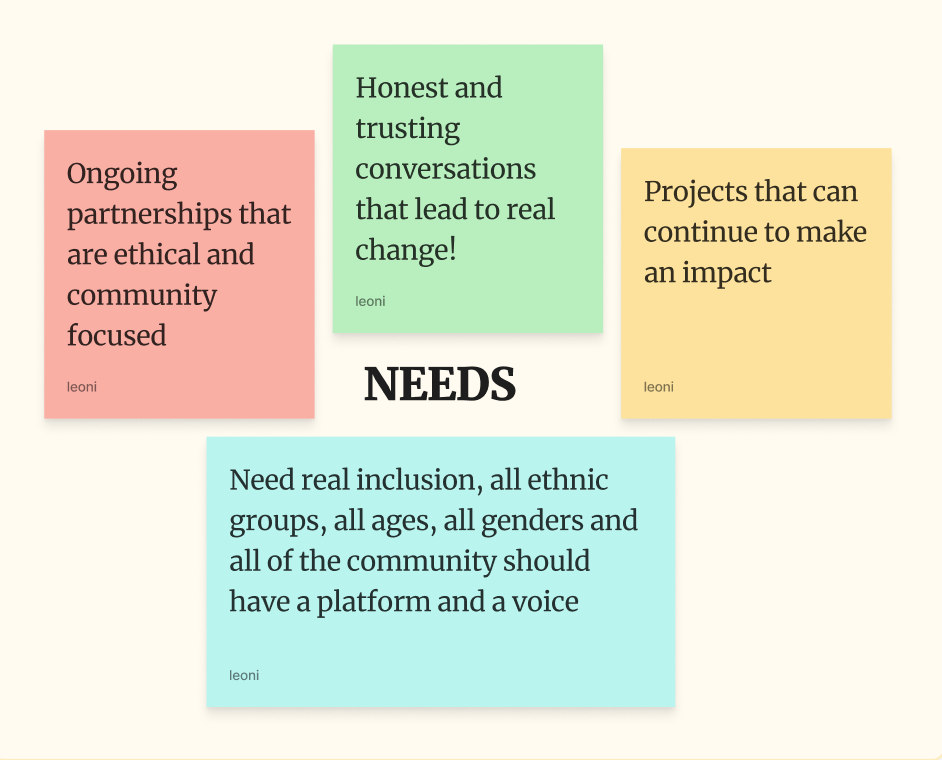
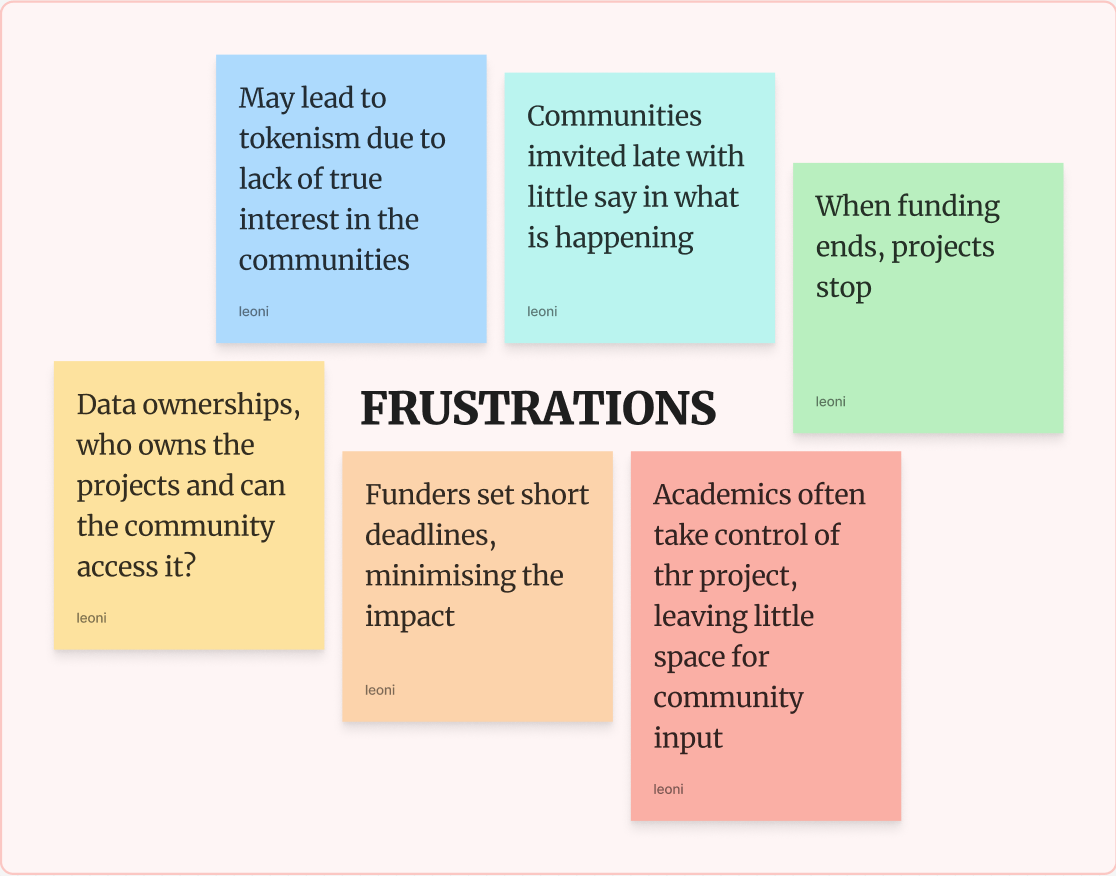
However, there are many frustrations from communities and charities such as the researchers often taking the lead of projects and allowing little input from charities. This is frustrating as they cannot execute their project how they want which means it may not have as much of an effect. Furthermore, often projects are stopped due to lack of funding and the participatory collective will raise awareness of this, getting charities the support they need to permanently alter communities for the better.
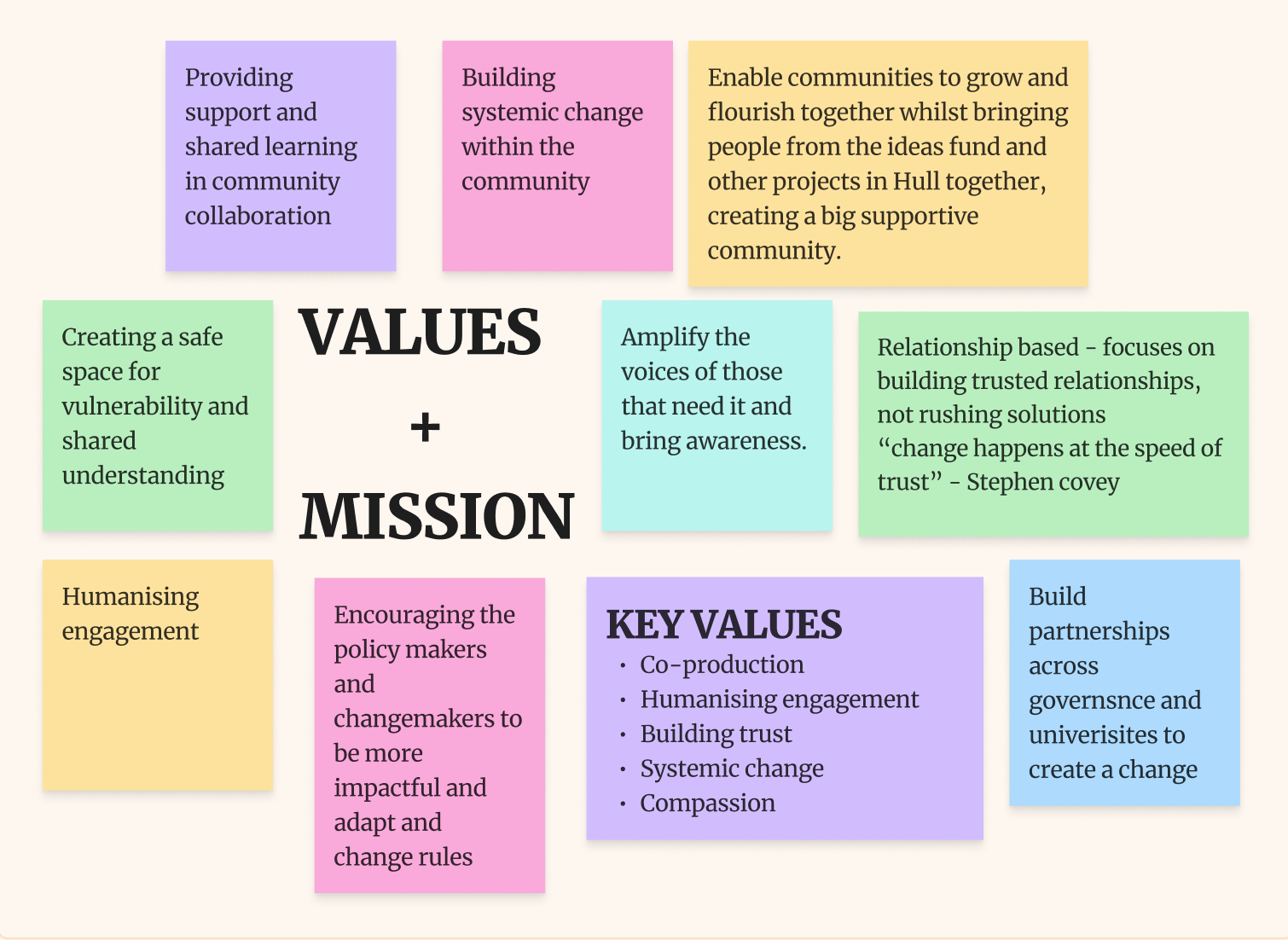
The values of the participatory collective are creating systematic change through compassion and human engagement. Through the participatory collective, I aim to show that “Anyone can get involved in charity work, from individuals to large multinational companies and even small local businesses”(figure 2) and through this I endeavour to create a real change. These values and mission will be clear throughout both the website and social media in order to let all users know the strong brand identity.
STAKEHOLDERS
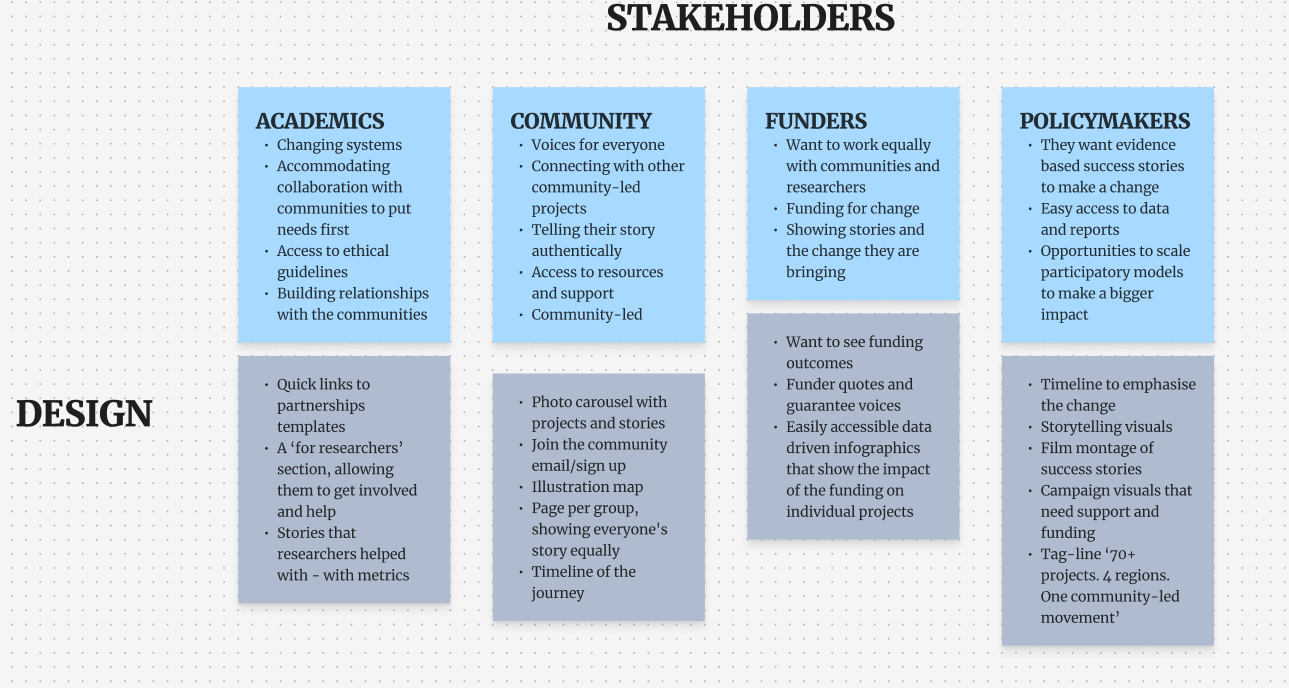
The participatory collective has a core aim of appealing to its stakeholders (the community, the funders, the researchers and the policy makers) as “Stakeholders are essential to a nonprofit’s success because they support the overall movement of a nonprofit organization in different ways.” (figure 2) and it’s important to appeal to them for this reason and encourage them to get involved whether that be raising awareness or gaining support on current/future projects.
The ideas fund is a funder (and core stakeholder) that supports many community-led projects around the UK and it has a few criteria which must be met for funding (which include : led by the community, based in one of the specific 4 local areas, focused on mental well-being and working with a researcher to share knowledge fairly). This is important as the participatory collective will embody all of these values and criteria.
USER PERSONAS
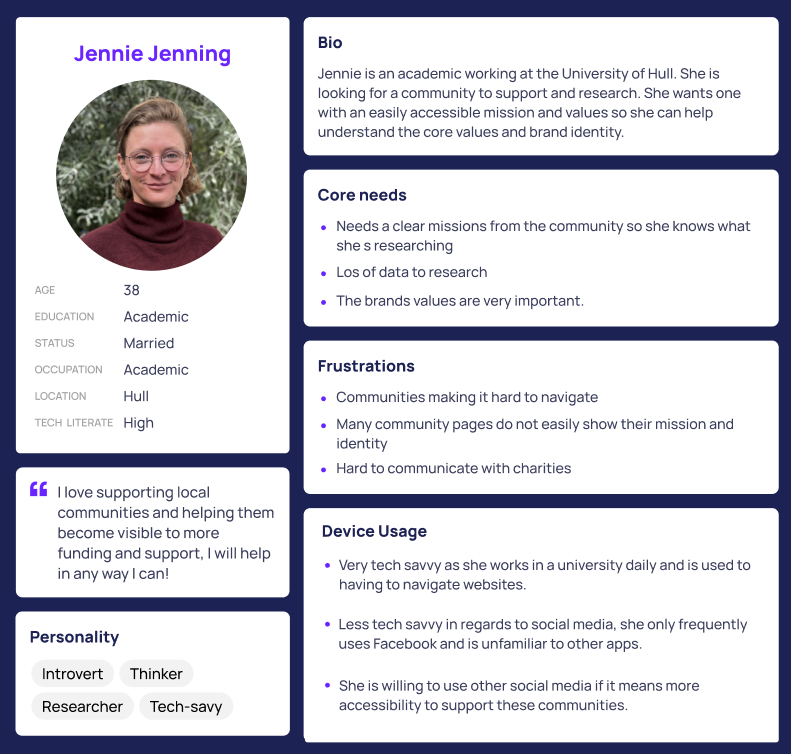
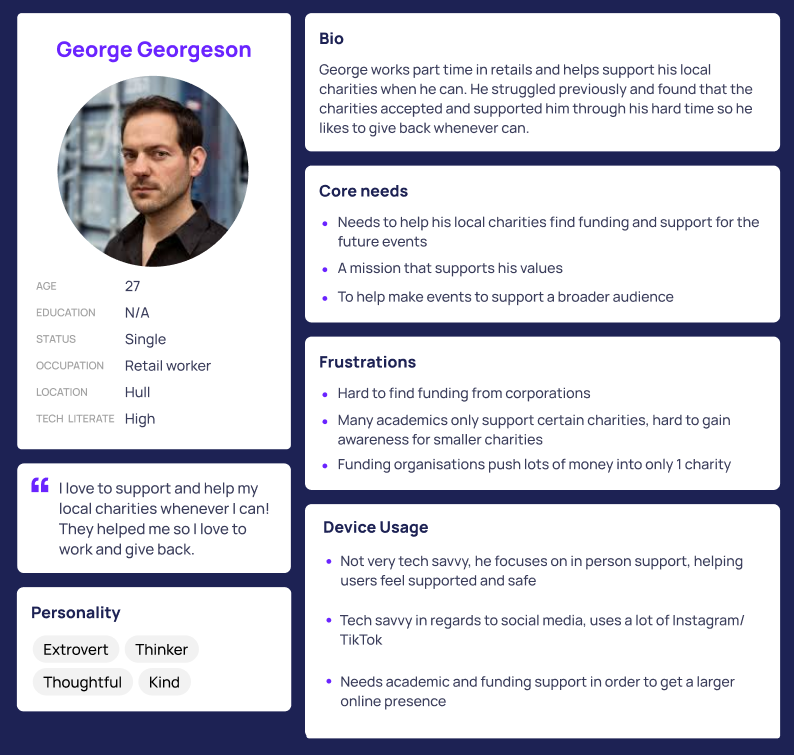
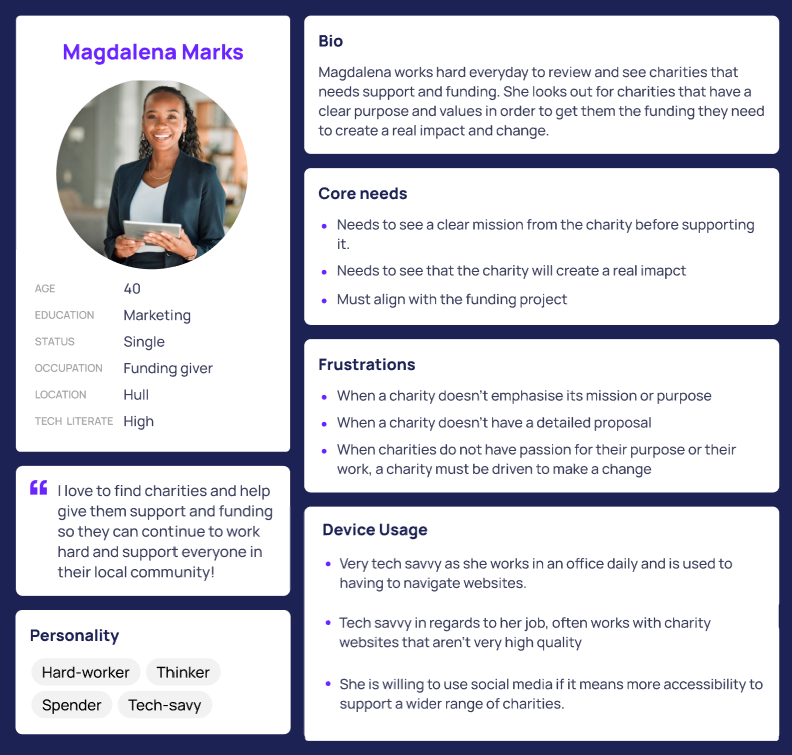
(Scroll the carousel)
In order to emphasise the importance of stakeholders, I have created 3 user personas. These personas will effect the way I create and structure my website as they are examples of my target audience. The advantage of a user persona is that is makes it easy to see the type of people that will use the website therefore it makes it much easier to choose its design.
It is very important to reference all of these stakeholders on my website. I intend to utilise storytelling on my homepage and employ call-to-action in order to encourage users to click through and navigate to the stories of each charity. I will also employ a page for the funders and academics, allowing them to tell their story in supporting the participatory collective and building a brighter future for these charities.
References
Figure 1 – Raj (2024) Key Nonprofit Stakeholders and How to Steward Them
https://donorbox.org/nonprofit-blog/nonprofit-stakeholders (Accessed 20th October 2025)
Figure 2 – Seashell (2023) Why is charity work important?
https://www.seashelltrust.org.uk/why-is-charity-work-important/ (Accessed 20th October 2025)
