Exercise 01: Initial Design Prototyping

Broad Moodboard

(Scroll the carousel)

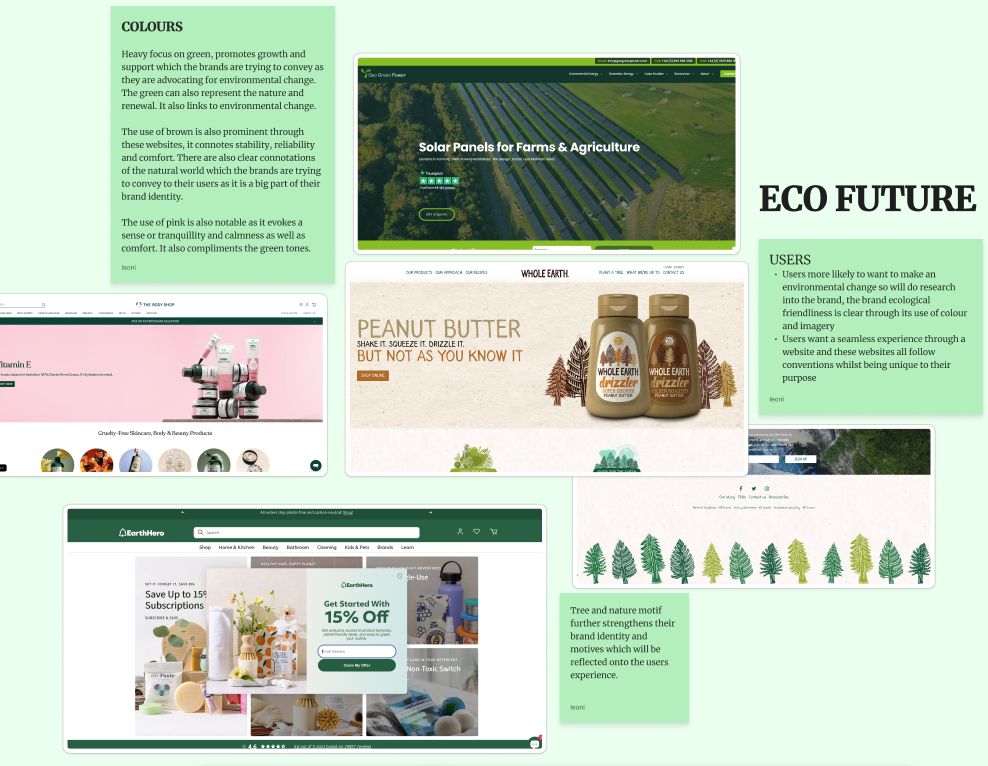
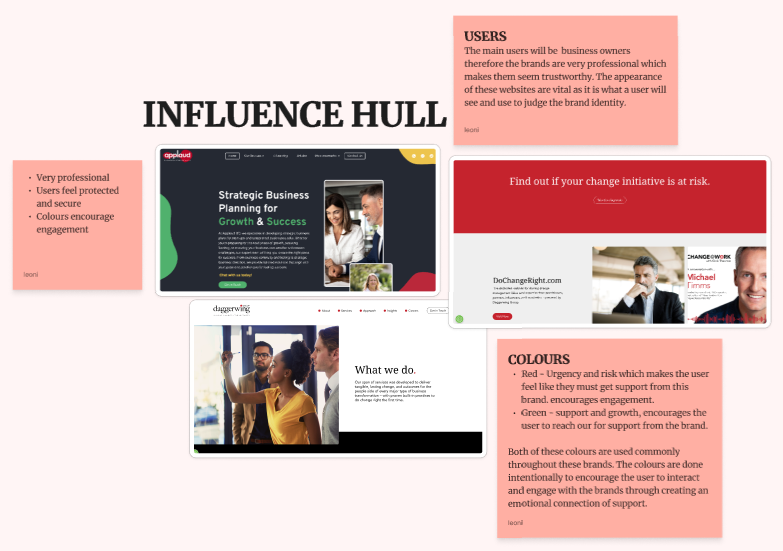
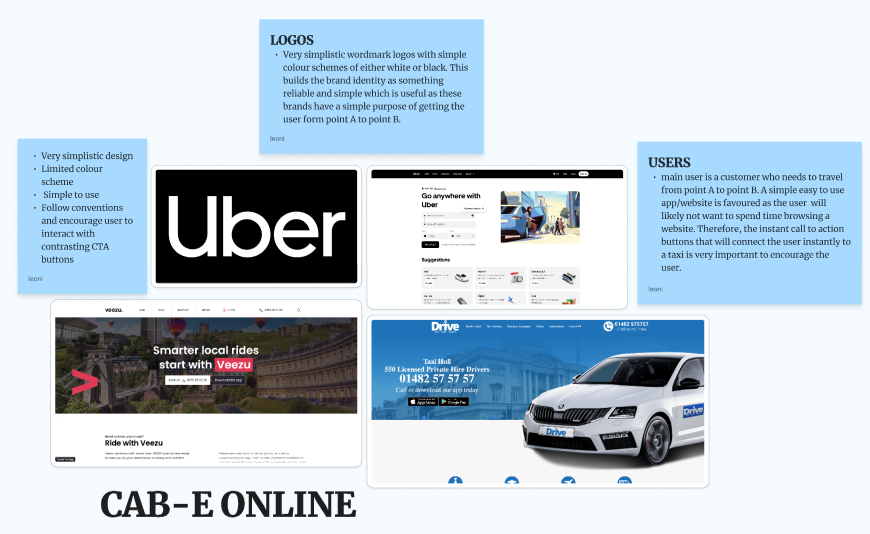
When I started the brief, I looked at all three of the chosen directions. Ultimately, I felt like the eco-future brand aligned better with my goals and I felt more of a connection to it. Having an eco-friendly brand to represent allows me to explore accessibility ideas of branding as well as the importance of sustainability in a brand identity. 

Eco-Future Mood Board

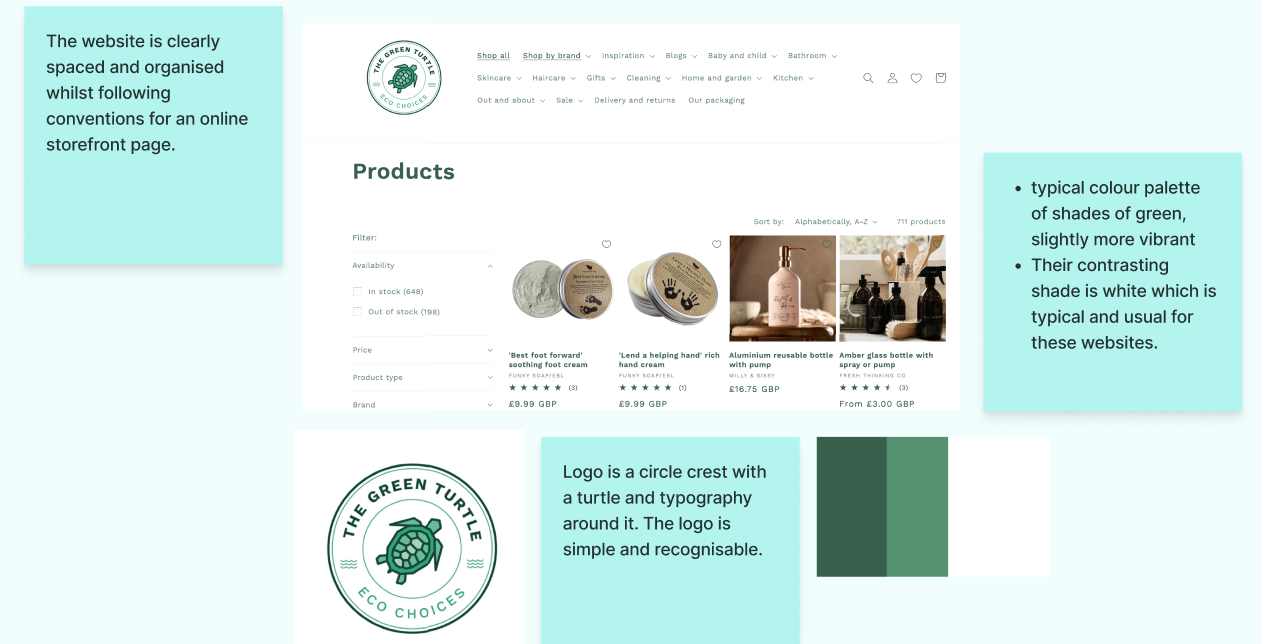
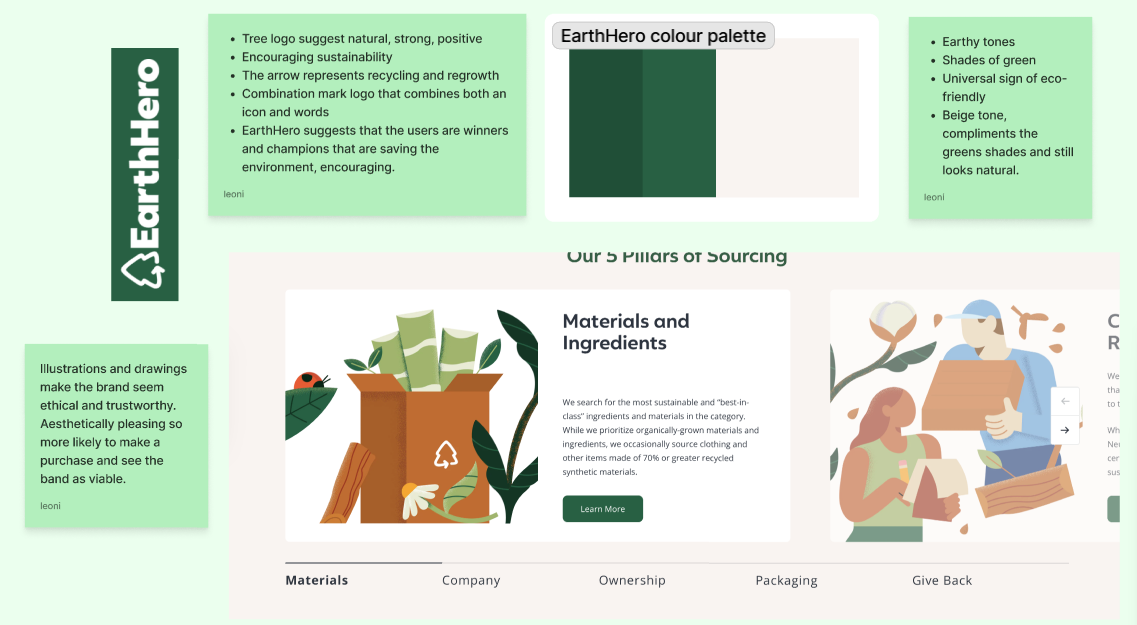
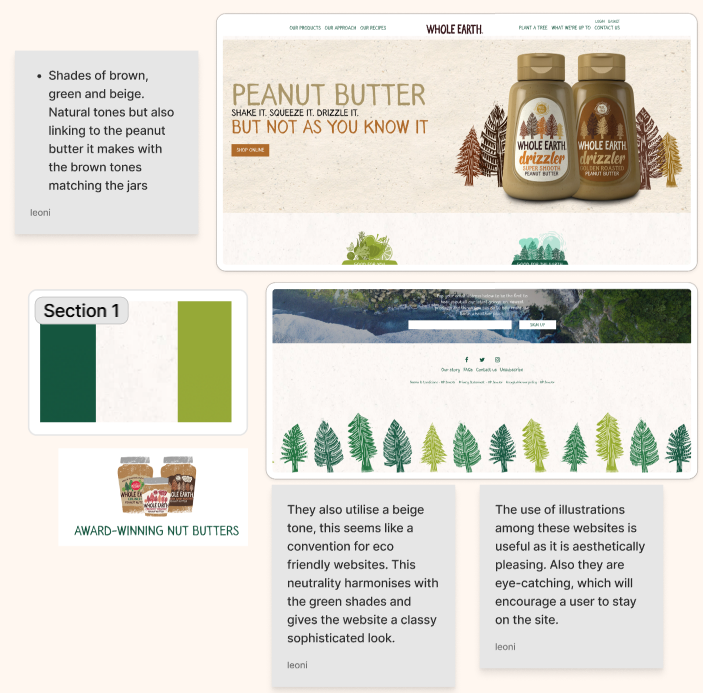
After choosing to focus on Eco-future, I decided to brainstorm eco-friendly products that I could use as inspiration. Many of these brands focused on utilising earthy tones to align themselves further with the environment and nature. Personally, I like the use of greens although, for my brand I will use some new colours to make my brand more unique and recognisable rather than just conventional. “Green evokes feelings like revival, freshness, vitality and peace due to its connection to nature” (Figure 3). Although I will not solely use green, the use of green is vital in order to connote nature and positively reinforce the relationship of the brand to the environment. Furthermore, many of these brands focused on using simple illustrations and I would like to replicate this on my website and my product design. Using illustrations personalises the brand and helps build a human connection with the user. 


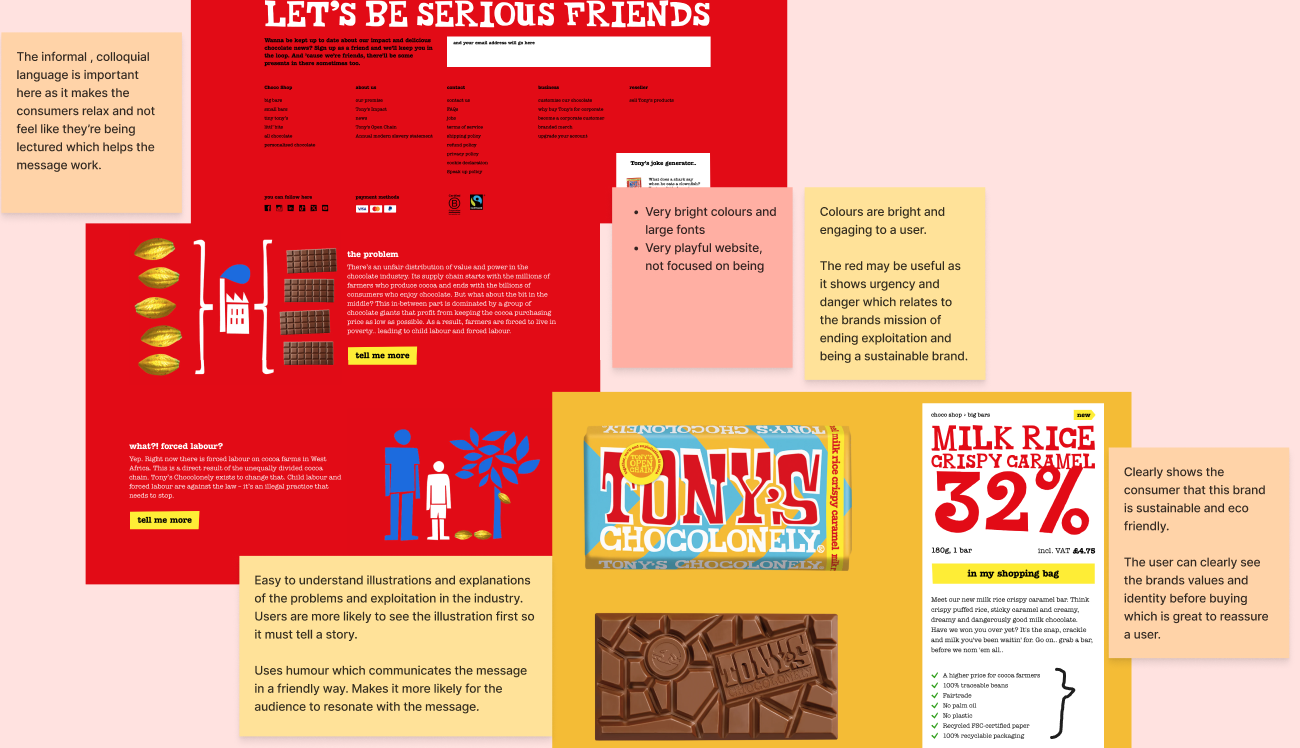
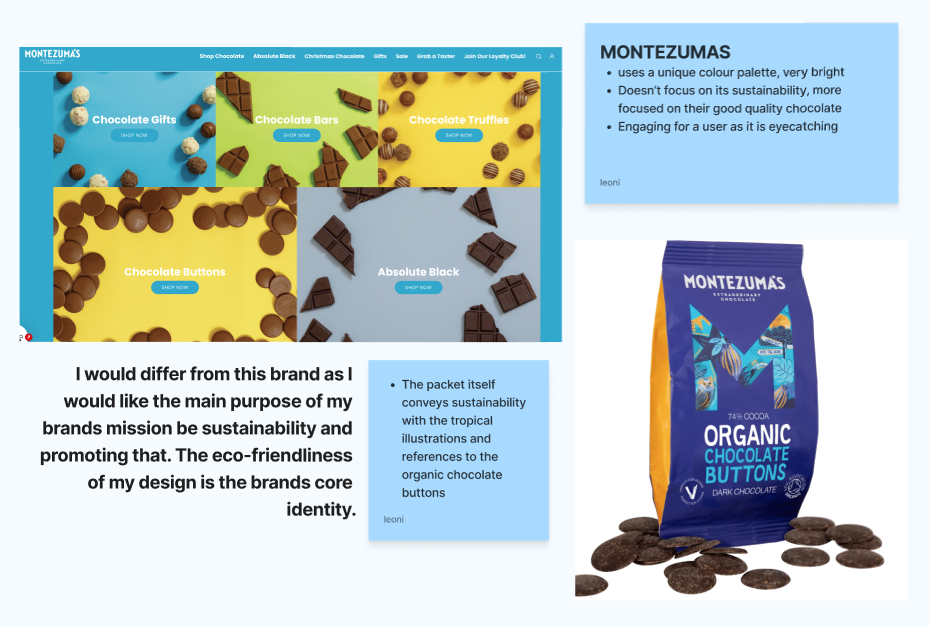
After looking at many different products, I decided to have a sustainable chocolate bar brand which is effective as I can focus on having sustainable packing as well as ethical brand ideology. I will follow in the footsteps of brands such as ‘Tony’s Chocoloney’ and ‘Montezumas’ who have a strong online presence as well as very strong brand values. 

User Research

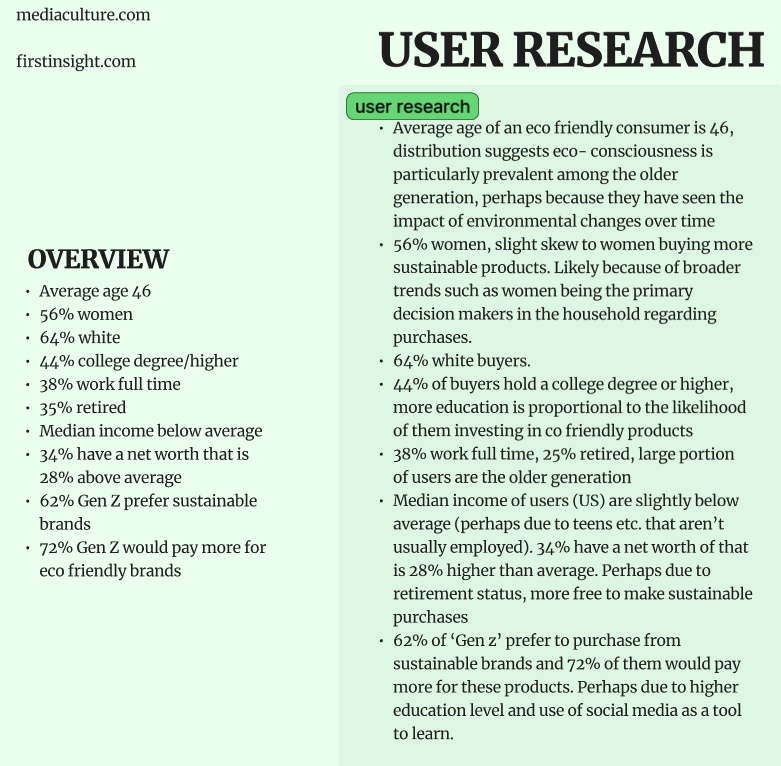
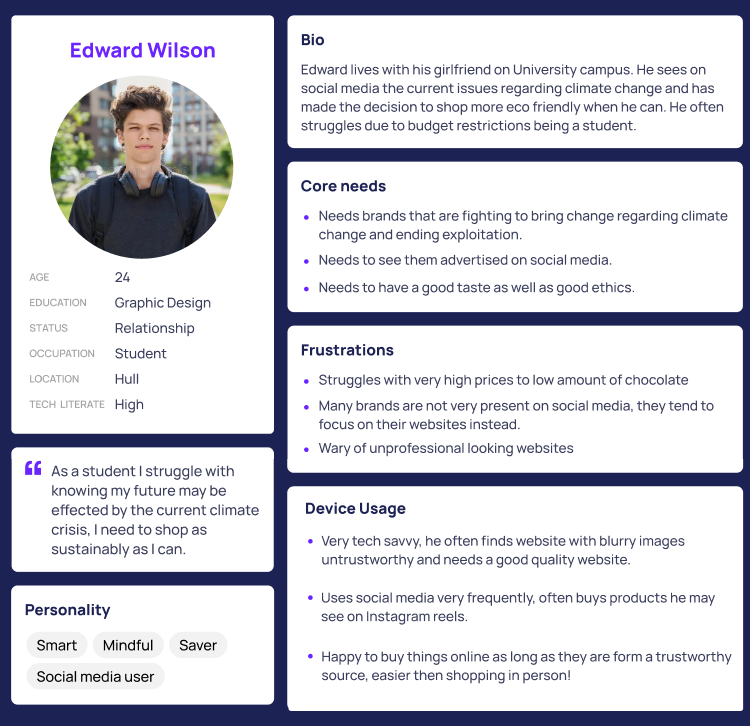
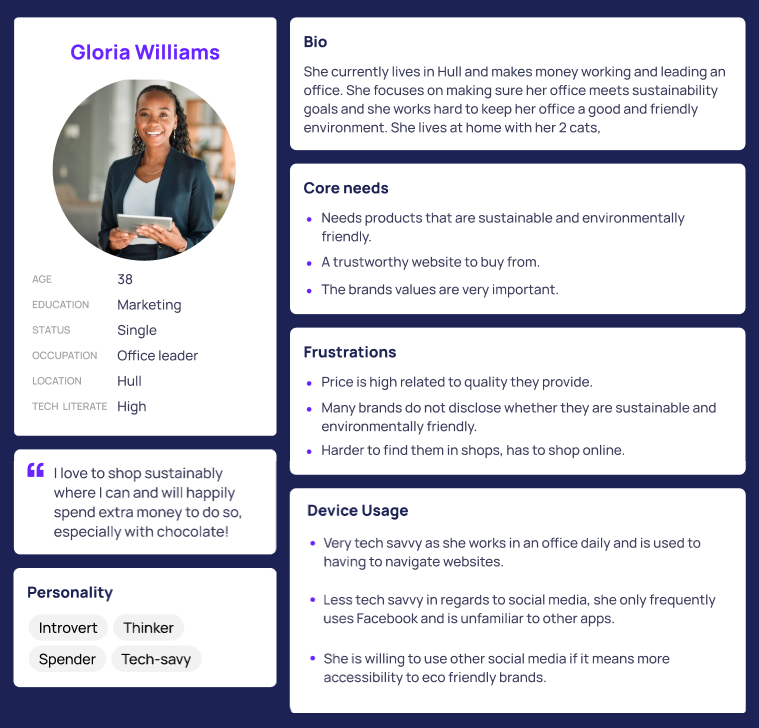
I also researched the potential users that I would have in my eco friendly brand. Through my research, I could see the user that I would likely get through my brand. The typical user of an eco-friendly brand is 46, however, I will broaden this audience as chocolate is marketable to all audiences, especially families and children who love chocolate. Focusing on marketing towards families and people of all ages will be particularly effective as it will help create a sustainable future and have a larger impact which aligns perfectly with the brands goals. 

User Personas

I created this user personas in order to understand the main user of an eco-friendly brand. My main user will likely be students and older adults as they will pay extra money for an eco-friendlier brand. My focus will be on the user through all parts of my brand design as “Modern consumers expect brands to take a stand. From climate-conscious processes and plant-based products to inclusive design strategies, young people want to buy from companies that champion causes that matter” (Figure 2). Regarding this, the idea of having an eco-friendly brand itself caters to the consumer. This will be effective as sustainability will be the brand ideology as well as a way to market the chocolate.  

Brand Personality and Matrix

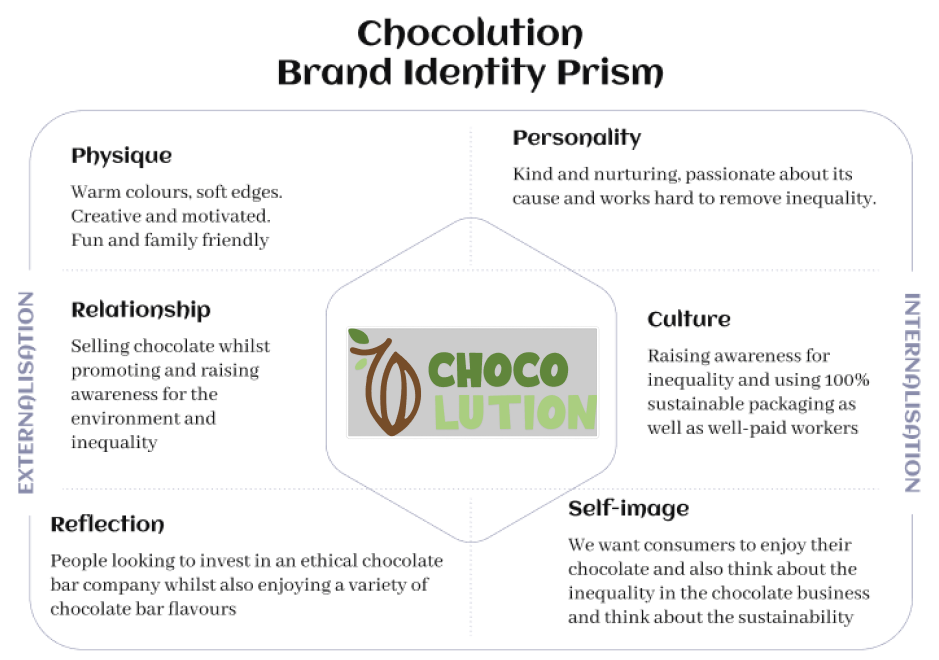
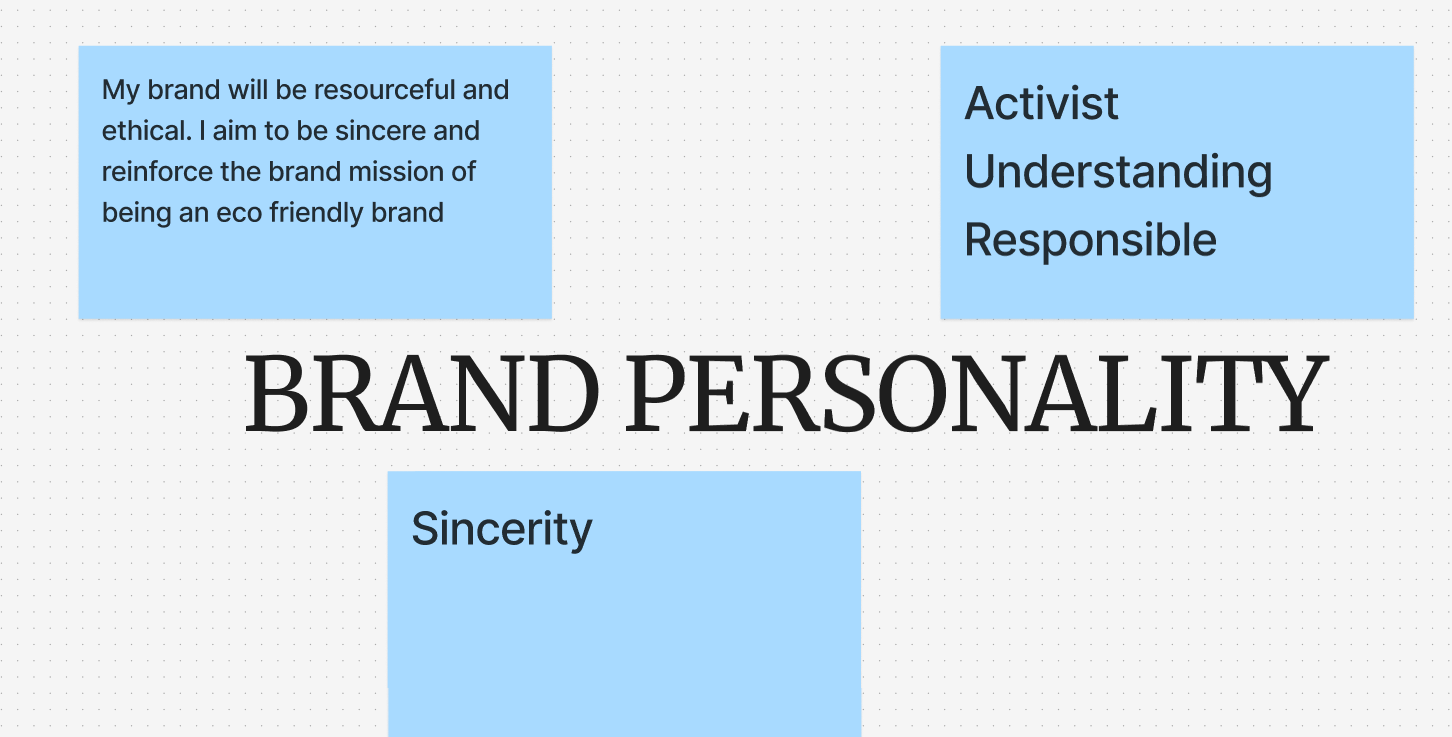
I created a brand personality and brand matrix, these helped me map out the key ideas for my brand. For example, I could easily choose my brand as an inviting, nurturing brand whilst also being creative and engaging. My main focus will be having a sustainable brand which encourages its users to focus on having an eco-friendly future. These brand ideas will also help me focus on using accessibility within my brand, for example, I will use large text and easy language to understand throughout my whole brand as well as using an accessibility icon on my web layout. 

Existing Brands

I also researched competitors that have an eco-friendly chocolate brand. Both brands focus on their brand ideology as a sustainable product and they use this heavily as a selling point in their marketing. “Forbes also discovered that 88% of consumers are more likely to be loyal to a company that supports social and environmental causes.” (Figure 1) In this case, I know that placing key consideration on the morality of the brand will be a good method to widen the audience. Therefore, if I utilise and emphasise the sustainability of the brand, the user will be more likely to invest and learn more. I intend to also use the brand identity as a key selling point in my brand, the sustainability of the brand will benefit the users, and they will feel more compelled to interact. 


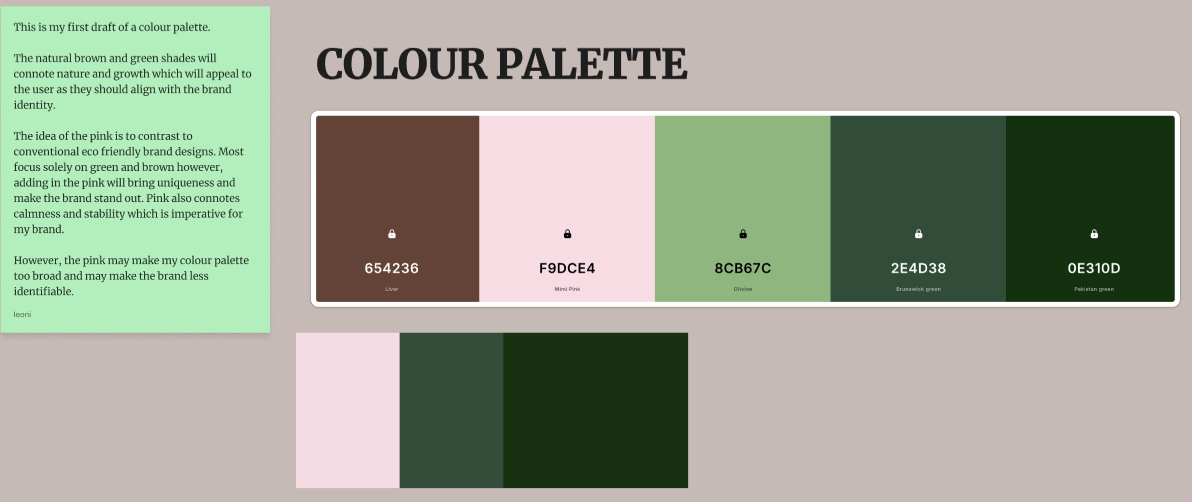
I also like the unique, engaging colour palette of both brands. I also intend to use a more recognisable colour palette to immerse the user more which will be especially effective in banners and adverts.  


REFERENCES 

Figure 1 – Ebbah (2025) Do Consumers Prefer Sustainable Businesses and Products?  https://www.astutis.com/astutis-hub/blog/consumers-business-environmental-preferences (Accessed 20th Dec 2025) 

Figure 2 – RODD (N.D) Purpose driven design https://rodd.uk.com/dialogue/purpose-driven-design/ (Accessed 21st December 2025)